
What Was Music?
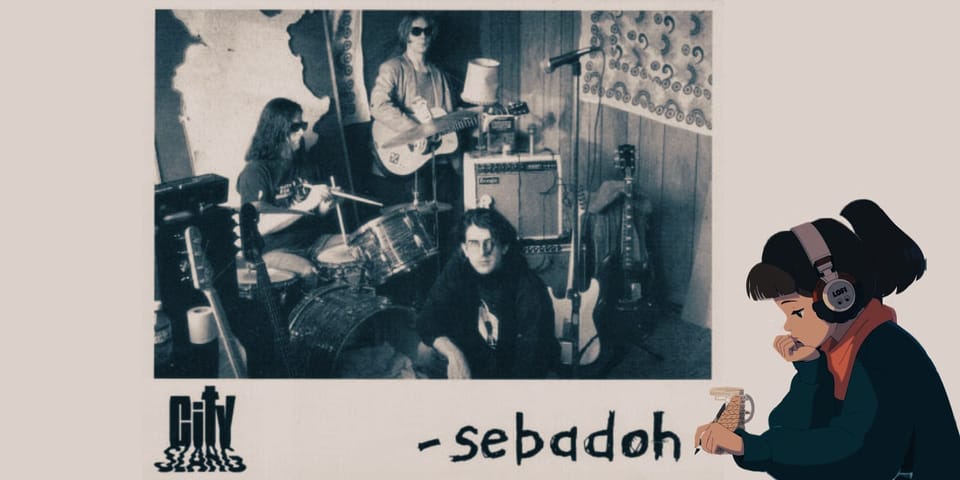
I read this paper the other day titled 'What Was Lo-Fi?' by Adam Harper, whose writing on music I've always found compelling.
It is one of those papers where the gist of the argument is easily and immediately graspable, i.e. 'lo-fi' used to mean one thing, but now it means something quite different. The rest of the paper is mostly teasing out the various positions, definitions and historical contexts found along the way.
Harper is more interested in what 'lo-fi'; was than what it is now. That is to say, 'lo-fi'; as colloquial shorthand for a kind of messy, scrappy, not particularly technically-adept music, as opposed to 'lofi' as cosy, coffee table grooves with a light dusting of fake vinyl crackle, usually found streaming in perpetuity on YouTube 'to study to'.
Although his focus is on what 'lo-fi' used to mean, it isn't an attempt to cling onto some nostalgic ideal of what it ought to mean. Language changes, meaning changes, genres come and go, and anyway with the benefit of age and hindsight, if you look closely at any kind of subculture you once held sacred in your teens or early twenties you'll doubtless find all manner of problems you never spotted the first time around.
Rather, the paper is more concerned with formalising a definition of 'lo-fi' based on a particular "historicised position" or perspective, one in which the term is associated with 90s indie bands from the US and a certain kind of DIY culture. Bands like Pavement, Guided By Voices, Sonic Youth, the mighty Sebadoh, artists like Daniel Johnston... you get the idea. As you can imagine, there's plenty of gendered and racialised politics wrapped up in these scenes mostly full of white dudes with guitars about what is and isn't deemed worthy of being called 'lo-fi', which he gets into, but in terms of the music-making itself, when Harper talks about what 'lo-fi' was, it is essentially an description of the fragile détente between signal and noise in any given piece of music that the label would be applied to. It can also mean the practice of actively and enthusiastically grappling with the interference inherent in whatever signal you are attempting to broadcast. Or in Harper's words:
an aesthetics of conflict, one that perceives the opposing sides struggling against each other within the musical channel itself. In other words, “listening for the hiss” can also involve “listening despite the hiss” or even “listening against the hiss.”
It brings to mind a quote I scribbled down right at the beginning of my PhD studies many years ago, from an artist called Elliot Woods: "the ego of the media is demonstrated through the vernacular of its deterioration". (I was, and remain, strangely attached to the unnecessary verbosity of this sentence; reading it is like setting off on an easy hike through some foothills only to find yourself scaling a gnarly, smug mountain range.)
I found all this interesting to think about in the context of the 65days back catalogue. I have never really thought of us as 'lo-fi' before, but there is no denying that we have spent our musical lives trying to articulate our feelings that the noise is the message, endlessly contaminating perfectly clear melodies and intent with contrary, antagonistic confusion. Aspiring to absolute clarity in our sonic sculpting even as we drown it in distortion. A total conviction in our mission pitted against existential uncertainty and doubt. Music as dialectics.
It is also interesting to think about in terms of musical structure rather than sound quality. The other day there was a little thread on Mastodon that got me thinking about musical repetition, which made me wonder: what would 'lo-fi repetition' be like, structurally? Not in a Disintegration Loops-style slow reduction of sound quality, but a more deliberately antagonistic attack on musical repetition, even as you attempt to maintain it? Perhaps you could say Steve Reich's Piano Phase could count as something like this, I dunno...
THE END OF MUSIC
In the context of the state of music more broadly, to me this paper shows a history of something valuable being usurped by a malevolent, affectless and empty aesthetic, something more easily sacrificed the content gods.
I half expected that Harper would get into this more. Plenty of his previous writing grapples with music under capitalism. But like an actual disciplined academic instead of a vague musician who sometimes writes about things on his blog, he does not let himself get distracted on delving too deeply into why 'lo-fi' is whatever it is now.
And all pop songs have always been commodities of course. But I think 'lofi beats to study to' is a great example of how music now is increasingly made to order, the creation of it becoming a kind of Fordist production line for easily-digestible, unchallenging grooves that serve a very distinct set of aesthetics, churned out at an unfathomable scale as musical gruel to feed Spotify's algorithmic playlists and YouTube streams. And of course, even describing it as a Fordist production line seems quaint in the age of AI Slop. For a brief sliver of time it was humans working this particular hustle, but I imagine it's now mostly genAI prompters that are vomiting out the vast majority of mid-tempo breaks and easy, empty jazz grooves that become these endless broadcasts of audio sludge. (Once again I will strongly recommend Liz Pelly's Mood Music if you'd like to know more about where I probably cribbed this from, and the evils of Spotify.)
It's a pity Harper didn't get more into this aspect of things. I'd be interested to read him dancing that delicate dance Mark Fisher was so good at, a passionate but careful argument along the lines of "I am not saying things were better in the past just because I am old and trapped in a nostalgic yearning for my lost youth, but I am saying that things now are worse because of capitalism and the past still might offer solutions we have overlooked".
Anyway. What was 'lo-fi'? It was something, and now it is something else. And that begs the question: what was music? And is it now something else? I think the answer to the latter is yes, but the nature of what exactly remains slippery. And I am not sure I am interested in joining the desperate race to try to not get left behind. In fact, I wonder if a retreat into history is the only viable option at all.
Until next time, this is Old Man Yelling at Clouds, signing off.
Member discussion